Showing posts with label Intellectual Property. Show all posts

Wednesday, April 1, 2009

WIPO Court?

Having watched the G20 "protests" with much interest (i.e. do these people really think a few thousand of them 'kicking up a fuss' is gonna make the slightest bit of difference to government policy then they're more retarded than they look) IP Freely noticed a piece on the IPKat to the effect that the G20 conference has reccomended a World IP Court.

The idea is that the World Intellectual Property Litigation Court is to be in action by 2012, WIPO say:

"The World Intellectual Property Organization welcomes this adoption of this proposal as a recognition of the need to balance the requirements of least developed litigation nations (the "LDL" group) with the fair treatment of intellectual property owners and creators, having regard to the organization's development programme and the need to preserve the organisation's prerogatives from unwarranted encroachments by the World Trade Organization".

The IPKat goes on to discuss quite where the court will be located, IP Freely recommends the UK so it is easy for him.

Wednesday, March 18, 2009

Round up!


Well I haven't written anything new for a while and in this time an incredible number of interesting cases / issues have arisen. This post aims to give an overview to, or more likely just link you to other people who have more interesting things to say!

First on the list (a very out-law based list) is the news from WIPO that the number of domain name disputes in the past year have increased by 8%, according to WIPO's director: "Cybersquatting remains a serious issue for trademark holders," shocking news? I think not. It seems likely that with the introduction of new TLD's will only create more problems. I have written about the introduction of these before and without going over the issues again what I will say is that it is simply a money making scheme which will create more expense for businesses in a time when they are trying to cut back.

The next point (and my second favourite of this round up) also comes from out-law and shows quite how far social networking site Twitter has come. A juror in the States (all fools anyway?) made tweets (see IP Freely knows the lingo) regarding the case. The verdict they reached is now being appealed on the basis that the juror was biased, examples of his tweets are as follows:

"Nobody buy Stoam. Its bad mojo and they'll probably cease to Exist, now that their wallet is 12m lighter,"
"I just gave away TWELVE MILLION DOLLARS of somebody else's money"

and best of all is the following, bear in mind that at this stage he had already been found out for his Twittering, so what did he do?........:

"Well, I'm off to see a judge. Hope they don't lock me under the jail, and forget about me for four days,"

Idiot!

Finally from out-law is a tremendous story about yet another idiot. This time someone infringed their own patent! Basically the guy involved went on BBC2 hit show Dragons Den, unlike most contestants (if they're called that) he managed to convince the dragons to invest £150,000 into his business: the Rapstrap. Unfortunately for all involved this muppet had already got a patent for the product 10 years previous when he worked for a different firm, the IPO have confirmed that the Rapstrap "falls within the scope of claims 1 and 5 of the patent," what action is taken remains to be seen.

The ever reliable IPKat features two cases that caught IP Freely's eye: the Google France v. Louis Vuitton Malletier case (C- 236/08) and the Beta Layout case (although for the latter we are awaiting a full translation), I suggest you head over to the feline page to peruse their views.

Also on IP Freely's recent radar is the case of Times Newspapers Limited (Nos 1 and 2) v United Kingdom (Applications Nos 3002/03 and 23676/03), tactfully reported in the Times Law Reports (here) this not surprisingly featured the Times Newspaper.

This week IP Freely has also been fascinated with the ongoing West Ham / Tevez / Sheffield United saga (and you can possibly add to that list Neil Warnock / the players / Ledds United) which seems to become more farcical by the day. Now as I see it surely the damage suffered by Leeds United (and Neil Warnock etc) is too remote? I would though like the views of those more experienced than me on this......anyone?

Thursday, February 5, 2009

Financial Times for free


Cityboys across um the City will be reeling once more after news broke that their Bible (The Financial Times) has been ripped off. Basically Blackstone (the investment group) had one account for the FT's website, this account allows the user access to numerous features and articles on the site. Naturally each account is meant for just one user however Blackstone gave the login details to all of their staff , according to Out-law:

"It said in court documents that it believes an account set up by a senior Blackstone employee in 2002 was used between 2006 and 2008 to access thousands of articles at the FT website, "far more than an individual would normally access"."

The FT has now issued a claim against Blackstone (and some of it's employee's) for copyright infringement and various offences under the computer misuse and fraud laws. They say:

"Account usage from specific computers is reflected in unique 'cookies'...The number of cookies recorded and the IP addresses associated with the credentials point inescapably to widespread use of the single, individual account on FT.com by many different persons on defendant Blackstone's US-based and non US-based network servers."

It seems strange that such cases do not arise more regularly, of course detection and evidential requirements are difficult however such practices are rife (I would think) across the business world and one would expect disgruntled ex employee's to blow the whistle.

"What do you think? Is the FT right to go after Blackstone, or are they over-reacting? Perhaps there is an alternative to the Court in this circumstance?"

Monday, January 19, 2009

The music you are downloading is illegal (probably)

95% of music downloads are illegal (according to the International Federation of the Phonographic Industry (IFPI) see original BBC article here) although there has been a 25% rise in legal downloads since last year.

The chairman of the IFPI stated:
"There is a momentous debate going on about the environment on which our business, and all the people working in it, depends."

"Governments are beginning to accept that, in the debate over 'free content' and engaging ISPs in protecting intellectual property rights, doing nothing is not an option if there is to be a future for commercial digital content."

However the Open Rights Group have different views:

"We are worried by the recording industry's desire to clamp down on illicit file sharers."

"We need to see how much better these companies do by getting their services right before governments start pushing drastic and draconian laws forward."

"Growing online sales show the recording industry can win against illicit file sharing."

"If companies go further and offer the same sort of experience as P2P then they will win new revenues, and reduce copyright infringement, which we would welcome."
So where does IP Freely stand? I hear you cry. Well with the Open Rights Group if you must know, where industries have taken action before it has ended disastrously (think the computer game industries ongoing attempts) at present more time should be spent on the technologies involved as opposed to legislating to punish the "theft". All that will happen if legislation comes first is that even before the legislation is pushed through it will be outdated and useless. Before going after their customers the music (and other entertainment) industry need to look at their business models, perhaps by being creative in the way they make their money they won't need to alienate the consumer.

"What do you guys think though? Is it right for the entertainment industries to protect their interests through application of the law or should they pull the proverbial finger out and come up with new ways of doing business?"

Wednesday, January 14, 2009

Ronaldo Real's number 9?


IP Freely must admit that he is not a big fan of Cristiano "wheres my Ferrari gone" Ronaldo but as this is an IP blog IP Freely feels obliged to mention his new Portugeese registration for 'CR9'.

Originally reported in the Telegraph speculation has now arisen that this registration (he also has a pending CTM application for the same mark) shows that he is due to abandon the Red Devils (that's Manchester United for those of you not in the know) for sunny Spain and Real Madrid. The reason? well at United Ronaldo wears number 7 with (I think) Berbatov holding the coveted nunber 9 shirt however if he moves to Real Madrid it is believed he will take the number 9 shirt hence the applications. It also noted that perenial underachiever Saviola currently holds the 9 shirt at Real and has recently been linked with Wigan so maybe there are some legs in the story!

More interesting still is the classification for which Ronaldo has applied: "Services for providing food and drink; temporary and hotel accommodation" Ronaldo hotel anyone? I'll take the diving suite please!

Tuesday, January 13, 2009

What is the difference between a patent and a trade mark?

My readers seem to be a mixed bunch, however increasingly you appear to be less and less experienced with the world of intellectual property (hence why you are here!) which got me thinking that it was about time that I made a simple guide as to the differences between the different forms of IP. Now whilst this is something that I could very easily produce for you my lovely readers quite simply I can't be bothered, so erm check out this nicely written guide on Phoista.

Monday, December 22, 2008

It's all the ISPs fault!


Of interest to those of you following the internet download cases i.e. those involving Atari, Davenport Lyons and a load of unfortunate members of the public will be this revelation in the Guardian (for the latest on the Davenport cases check out this article).

For those of you too lazy to read it (and in all fairness why would you be here if you merely wanted to read the Guardian) the article reveals the Government's plan to make ISPs liable for music and films illegally downloaded by their customers. In 'payment' for this the ISPs will be afforded a small payment for each track or film that their customers download legally, it doesn't take a genius to work out that this would equate to a very considerable amount of money.

The Department for Business, Enterprise and Regulatory Reform has been considering vaious proposals to solve the file-sharing 'crisis' and is due to publish it's report in the new year.

Wednesday, December 17, 2008

Hasbro drops Scrabulous dispute in the States


The long running 'Scrabulous' dispute appears to finally be at an end.

Basically though the dispute involves the social networking site Facebook, on Facebook users can install their own add-ons. One such add-on was called Scrabulous and was based on the classic Hasbro word based board game Scrabble. The creators of Scrabulous, RJ Software were threatened with legal action by Hasbro and as such pulled the game. However the dispute did not end there, RJ Software then created two new games Wordscraper and Lexulous to get round the problem but again Hasbro threatened them with legal action for copyright infringement. Hasbro argued that the games were too similar, fortunately for the games' fans RJ Software and Hasbro have now come to an agreement over the games with RJ Software making the "necessary modifications" to satisfy Hasbro.

A joint statement provided as follows:
"The agreement provides people in the US and Canada with a choice of different games and also avoids potentially lengthy and costly litigation,".
Unfortunately for all involved the rights to Scrabble outside of the US and Canada are owned by Mattel. As of yet they have not announced that they will drop their claim against RJ Software.

IP Freely never liked Scrabulous in the first place!

Friday, December 12, 2008

Stop using that smiley!


The Guardian reports here that some crazy Russian has registered ;-) as a trade mark and plans to charge businesses "tens of thousands of dollars" to use it...

IP Freely says lay off the vodka I'll give you a week until an application for revocation is made and I dunno 6 months until the mark is revoked. Still though it's funny.

UPDATE

15/12

Have just read a quick note on this on Pinsent Masons Out Law site, read it here.

Whitman loses the plot


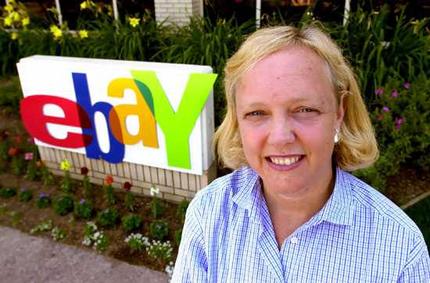
eBay's former chief Meg Whitman has lost a WIPO claim for megwhitman2010.com and four other domain names that she claims exploit her fame.

There has been widespread speculation that Meg is planning to run for election as Governor of California in 2010 (hence the 2010 part of the domain name), other domains in dispute are: megwhitmanforgovernor.com and meg2010.com. All of which are currently not working!

The WIPO panel agreed that Meg was internationally famous but that this alone was not enough to prove that the domain's were identical or confusingly similar to a trade mark in which she owns rights. Meg had opted for a single member panel (cheapskate, the 3 member panels have better transfer rates if my memory serves me right!) and that single member said: "Merely having a 'famous' name is not sufficient to establish common law trademark or service mark rights in the name," yeah well um that's pretty obvious but it does get more interesting: "To be entitled to protection under the Policy, however, a personal name must function as a trademark, and for common law trademark rights to exist, the Complainant’s personal name must have come to be recognized by the public as a symbol which identifies particular goods or services with a single source,".

For Meg to be successful her name: "must be used such that a relevant segment of the public comes to recognize her name as a symbol that distinguishes her services from those of similarly situated service providers.".

To put it bluntly she just hasn't: "provided services under the name 'Meg Whitman' as a source-indicator to a segment of the relevant buying public based on her performance as President and CEO of eBay."

You got that? so basically it's no good just being famous, you also have to use that fame if you wan't to rely on it. But then we all knew that didn't we? and we're thinking why is this guy writing about this as it is very basic........

You've got a point.

Thursday, December 11, 2008

'Sequin Art' not descriptive of sequin art?


An interesting decision has come out of the High Court.

Kitfix Swallow Group (KSG) had been selling craft kits that allowed purchasers to create pictures with sequins since 1990. In 2005 KSG registered a Community Trade Mark for 'Sequin Art' and then in 2007 KSG sued toy wholesaler 'Great Gizmos' for trade mark infringement and passing off as they were importing and selling similar kits under the same name. In response Great Gizmos applied to the OHIM for a declaration of invalidity of the trade mark on the grounds that it was descriptive. However in November 2007 an application by Great Gizmos to put the court proceedings on hold pending the outcome of the OHIM's decision was refused.

In the High Court Judge Mackie QC summarised the defendants arguement as: "[The words] immediately inform the average consumer that the goods in issue are used to create art of artwork using sequins...there is no lexical invention or any unusual syntactical structure to the term 'Sequin Art'."

KSG said that the name merely eludes to the characteristics of the goods, stating: "[The Name] alludes to what the finished product might wish to be considered...the goods themselves are not pictures. The goods merely comprise some sequins and instructions, i.e. nothing more than a collection of plastic bags that contain components that might form a picture in due course if suitable skill and endeavour is expended by someone."

The Community Trade Mark Regulations 1994 effectively allows for descriptive marks that have acquired a distinctive character in relation to the goods or services for which it is registered. Thus KSG also argued that not only was the mark not descriptive it had also gained further distinctiveness through it's use.

Judge Mackie stated: "My own first impression albeit superficial (perhaps like that of a purchaser) was that these products of the same name and nature were part of the same range...although confusion might not happen very often I consider that there is certainly a likelihood that it would given the background, the similarities between the products, the nature of the market and the fact that both kits are called 'Sequin Art'."

In the end Judge Mackie found in KSG's favour ruling that there was both trade mark infringement and passing off, on top of this he dismissed Great Gizmos application for invalidity. He stated:

"I also conclude from the evidence that the mark 'Sequin Art' is distinctive either inherently or because of its use over the years…'Sequin Art' is allusive not descriptive, because while it indicates the nature of the product it does not describe it...further use over the years has made it distinctive."

Damages are to be assessed.

Fancy a refreshing Coke Cola?


The Company Names tribunal has ruled that a company called Coke Cola must change it's name and pay £700 to soft drink behemoth Coca Cola.

Coca Cola argued that the name Coke Cola Limited was misleading and takes advantage of Coca Cola's famous trade marks. Coke Cola made no opposition and must now change their name and pay £400 towards Coca Cola's application fee and £300 towards their costs. The ruling is historic as it is the first to be decided by a Company Name Adjudicator, this role was introduced by the Companies Act 2006 and came into force on the 1st of October (this year).

Under the Companies Act 2006 anyone can file an objection with the Company Names Adjudicator if a new company is incorporated under a name associated with the complainant, for which the complainant has goodwill or in fact a name that is similar and is likely to mislead a consumer by suggesting a connection between the businesses.

IP Freely is a big fan of this part of the new Companies Act (although it is not a fan of the staggered implementation of the act as a whole which merely provides for CONFUSION!) as previously it was difficult to object to 'similar' company names. Basically if it wasn't identical it wasn't worth complaining about and if it was identical then no one else could have registered it anyway!

On a more important note IP Freely has yet to see the Coca Cola Christmas Ad.....................

Wednesday, December 10, 2008

Who cares about the credit crunch when you can litigate

This may be old news but the number of IP disputes in the High Court has shot up by a whopping 83 per cent in the past year, this is as many commentators predicted with businesses moving to protect their IP rights in the economic downturn.

Statistics show that 422 IP cases reached the High Court in 2007, this is up from 230 in 2006. Patents and registered design cases rose a massive 95 per cent, while copyright and design rights claims were up 43 per cent.

Obviously this is good news for professionals, although IP Freely is beginning to realise that there is always work for an IP lawyer......in good times clients have more cash to splash and so there is work to be had in advising how to protect rights and yet in the bad times there is a wealth of litigation to play with....can't lose.

Thursday, December 4, 2008

.tel on sale

Today is the day that .tel domains were made available for trade mark owners, for more details see the earlier post here. Interestingly enough (and despite IP Freely's views on the matter) the Guardian reports that the company behind .tel insist: ".tel should not be seen as yet another attempt to extract cash from brand owners and companies desperate to keep control of their online presence."

Apparently .tel allows domain owners more freedom in how they use the internet: "Instead of having to go out onto the web to get further information, you go to the DNS and every single way I can interact with you or a business is delivered straight back," for more details check out the Guardian article here.

Marks and Spencer trade mark infringement


It's not just a trade mark infringement case......it's a Marks and Spencer's trade mark infringement case. Middle class favourite Marks and Spencer have been sued by Interflora (the worlds largest flower delivery firm), also named in the suit is Flowers Direct Online (who do exactly what you might think they do).

Basically Marks and Spencer and Flowers Direct Online are accused of bidding on Interflora's trade mark (that would be 'Interflora') and mispellings of the same on Google's Adwords. Adwords allows users to bid for certain keywords, then when someone searches for those words on Google their site appears in the "sponsored links" section.

Apparently: "when a user enters the search term INTERFLORA or similar into the Google search engine, it is the intention of that user to look for [Interflora or its associates]."

Well that was pretty obvious but the claim went on: stating that the unauthorised use was detrimental "because there will be a blurring or dilution that will lessen the capability of the Trade Marks to distinguish [Interflora] and its goods and or services from those of others." and that using the marks enables M & S and Flower Direct "to free-ride upon the fame of the Trade Marks, thus conferring upon themselves and/or their goods or services an unfair advantage over the Claimants and/or other traders, and/or members of the public."

Avant IPers will be aware of the recent 'Mr Spicy' case where the defendant was not to infringe a mark in the same way because the sponsored word itself was 'plain English'. Applying the same rule in this instance it would appear likely that M & S and Flowers Direct will be found to have infringed Interflora's mark, unfortunately though IP Freely is not the judge and we will have to wait for the verdict.

Wednesday, December 3, 2008

Snow White gets Dopey


The IP Kat features as interesting story just in time for the panto season. Apparently a production of the family favourite Snow White has fallen foul of copyright law (not TM?). A theatre in Bolton was due to put the show on complete with seven dwarves, that is until Disney got involved. The production has been forced to change the name of six of the seven dwarves (as IP Kat rightly mentioned, why only six of them? what about the seventh?). Now there are a number of issues here: firstly is the original article (from The Bolton News) correct? The media industry as a whole seems to intermingle the terms copyright, trade mark and patent as if they are all the same so perhaps they meant to say trade mark? After all since when did copyright protect a name? Secondly the characters appear to be the same (albeit named differently) now if Disney really were enforcing their rights then the characters would potentially be protected by copyright and finally the story itself has been around since the 19th century so surely copyright would be out of time? (although it should be noted that the IP Kat mentions the dwarves were not named until 1937).

In all honesty if the production company involved were to contest this then it is more than likely that they would be allowed to use the names. As it is they probably don't know their rights / don't think it's worth arguing over! Unfortunately most people don't know their rights and are reluctant to seek professional advice.
You can read the IP Kat article here and the original Bolton News article here.


Monday, December 1, 2008

Copyright and your website


It has become apparent from looking at my Google analytics stats and the emails I have been receiving re this blog that a lot (if not the majority of my readers) are new to the subject of intellectual property; one even said (and I quote) "wow people take these trade mark things seriously" um yes yes people do you fool; but I digress. As a caring sharing kind of guy I will start putting up some more basic material for those new to the IP world, now this doesn't mean i'll stop writing about current affairs!

So here's the first one, 'Copyright and your website' enojoy:

As a website owner it is essential that you consider the various forms of intellectual property in order to protect your website from both being copied and also ensure that material you use does not infringe the rights of another party. In what will be a series of articles I begin by looking at copyright.

  • Make sure that all work on the website is original and in order to be protected by copyright it can be shown that it has been created by skill and effort.
  • Keep records of who creates the works and when they are created, consider sending to yourself or a copyright bank service.
  • In the UK copyright is an automatic right but in some countries copyright must be registered, if this is the case in countries you wish to operate in then ensure your copyright is fully registered in order to protect your rights.
  • Include copyright notices both for individual works on the site and the site as a whole. i.e. who owns the copyright for example: © your company name 2007.
  • Also include restrictions / instructions on use and copying from the site. Clearly stating what can and cant be used and if material can be copied what notices have to be included. You should also consider whether you want to put valuable work up on the site as whilst you can put up notices etc there is no physical way to stop people stealing your work.
  • Keep an eye out for infringements and as soon as you become aware of any put them at notice of your copyright.
  • If you are using any third party works on your site then ensure that you have the appropriate licences for it. In the case of work commissioned for the site for example web designing etc then consider a licence or agreement transferring the rights in it to you.
  • Where employees create work for the website the copyright would automatically be held by the employer. This is true for this country at least but not for some others, if you are operating a website from outside of the UK then you should consider an agreement whereby the rights in the work are transferred to the employer.


UKIPO in update shocker

They've changed the IPO site!

Whilst I for one will miss Wallace and Gromit's cheery faces on the home page it seems on the whole to have been a change for the good. Aesthetically it's good and though i've only had a cursory play with some of the features that seems good also, my big bug bear.......that new logo it's horrible!

See for yourself here.


Friday, November 28, 2008

Intel dilution decision


Well than as promised here's a slightly more in depth look at the decision in the Intel case.

Background

Intel (that's the computer chip makers) sued CPM (a marketing and telemarketing company) over the registered trade mark 'Intelmark'. 'Intelmark' is registered for marketing and telemarketing services, Intel on the otherhand have their name registered for computer chips (and other related products). Intel's claim was that 'Intelmark' caused confusion with their own mark, despite it's use on very different goods / services. Intel opposed the application but the UK IPO found in CPM's favour, as did the High Court. Intel then appealed to the Court of Appeal who referred to the ECJ for clarification as to the extent of which trade marks in different fields could infringe each other.

Trade Mark Directive

Article 4(4)(a) provides that a mark can be prevented from registration or declared invalid if it is identical or similar to an earlier mark in a different class as long as this earlier mark:
"has a reputation in the Member State concerned and where the use of the later trade mark without due cause would take unfair advantage of, or be detrimental to, the distinctive character or the repute of the earlier trade mark,"

The ECJ was asked how a link between the marks could be made and what would be considered as unfair advantage or detriment.

The Ruling

As you may or may not be aware when cases such as this are put forward to the ECJ it does not itself decide for example if 'Intelmark' is an infringement, instead it makes a decision as to the questions asked of it. It is then down to the referring court to apply the ECJ's decision.

The ECJ determined that in deciding whether there was a link between two marks, and whether there was unfair advantage or detriment a global assessment should be made, taking into account all relevant factors. In order to show a link it is only neccessary for the latter mark to bring to mind the earlier mark "for the average consumer, who is reasonably well informed and reasonably observant and circumspect,". Thus a huge reputation for certain goods is not enough to imply a link between marks. "Proof that the use of the later mark is or would be detrimental to the distinctive character of the earlier mark requires evidence of a change in the economic behaviour of the average consumer of the goods or services for which the earlier mark was registered consequent on the use of the later mark, or a serious likelihood that such a change will occur in the future."

So seemingly the ECJ has put the onus on the earlier brand to somehow show that they suffer economically because of this latter brand, but the question that is being discussed around the IP blogs is how is this done? How can it be shown that particular lossed are due to this and not for example the credit crunch? Or a change in interest rates etc. Another worry is that this ruling leaves it open for people to go and register famous trade marks in different classes (Nike for food perhaps?), maybe this is a ploy by the ECJ to raise revenue for OHIM by forcing brand owners to attempt registration in all classes?


European trade marks in a virtual world

Good news, my dissertation is now available for download from the widely respected Class 46 blog here. Or if you can't be bothered to visit the site then just click the title of the dissertation below to download it:

“Ownership of Intellectual Property in the Virtual World its real world effects and justification: focusing on UK/EC Trade Mark Law”

I look forward to hearing any views you may have on it.